
Lincoln Parish Arrest Records and Court Charges
Lincoln Parish arrest records are law-enforcement records. They may relate to an arresting agency, incident report, booking, jail custody, or other sheriff-side material. The Lincoln Parish Sheriff's Office is led by Sheriff Stephen Williams and operates from the public safety complex in Ruston. The sheriff site provides public-safety links, app links, sex-offender access, arrest report channels, tips, and public-records request instructions.
Court charge records are different. Research from the Clerk's criminal department says criminal records include citations, indictments, arraignments, and dispositions of criminal cases. The District Attorney decides what formal charges to pursue after arrest where prosecution is required. The Clerk then maintains the filed criminal record and minutes. Booking data can show why a person entered custody, but the court file is the source for formal charge status and final outcome. For final pleas, dispositions, and sentences, use the Lincoln Parish criminal court records case file.
The official sheriff biography page identifies the local law-enforcement office involved in arrest-side records.

That sheriff context helps separate arrest records from the court charges maintained by the Clerk.
Find Lincoln Parish Arrest Records
The first step is to decide whether the desired record is a booking record, a court charge, a custody status, or a final criminal case result. Lincoln Parish does not have one public portal that merges every arrest, booking, charge, disposition, and custody record. The official access path is a fallback chain: check the sheriff roster or request channel for arrest and booking material, check Clerk Connect and the Clerk's criminal department for charges filed in court, and use court or jail contact points when the online record is incomplete.
- For current custody, check the official Lincoln Parish Sheriff's Office inmate roster or call LPDC if the roster is not enough.
- For arrest or incident records not shown online, send a written sheriff public-records request with names, date, time, and other identifiers.
- For charges filed after arrest, use Clerk Connect or contact the Clerk's criminal department for citations, indictments, arraignments, dispositions, and minutes.
- For prosecution context, use the Third Judicial District Attorney's Office, but do not send Clerk copy requests there.
- For final outcome, read the disposition and sentence in the criminal court record instead of relying only on booking text.
The sheriff phone and public-records request channel are especially important when the arrest record is not visible through a public roster. The sheriff request page cites Louisiana Title 44 and accepts written requests by mail or email. Costs depend on quantity, time involved, and format.
Charges After Arrest Documents
Charges after arrest become court records through a charging document or filed citation. Lincoln Parish research specifically identifies citations and indictments in the Clerk's criminal records. The District Attorney is the prosecution office for Lincoln and Union Parishes, and the research notes that the DA decides what formal charges to pursue after arrest. A complaint, information, or indictment should be read as the accusation that starts or frames the court case, not as proof of guilt.
| Document | Who Uses It | What It Does | Lincoln Parish Access Point |
|---|---|---|---|
| Complaint or Citation | Law enforcement or prosecuting authority | States an alleged offense and can begin the court-charge record. | Clerk criminal records or issuing agency records, depending on filing status. |
| Bill of Information | District Attorney | Lists formal charges the prosecutor chooses to pursue in court. | Clerk criminal case file after filing. |
| Indictment | Grand jury process | Creates a formal felony accusation returned through grand-jury action. | Clerk criminal case file when public and not sealed. |
The U.S. Attorney Western District source shows the separate federal prosecution channel for charges outside parish court.
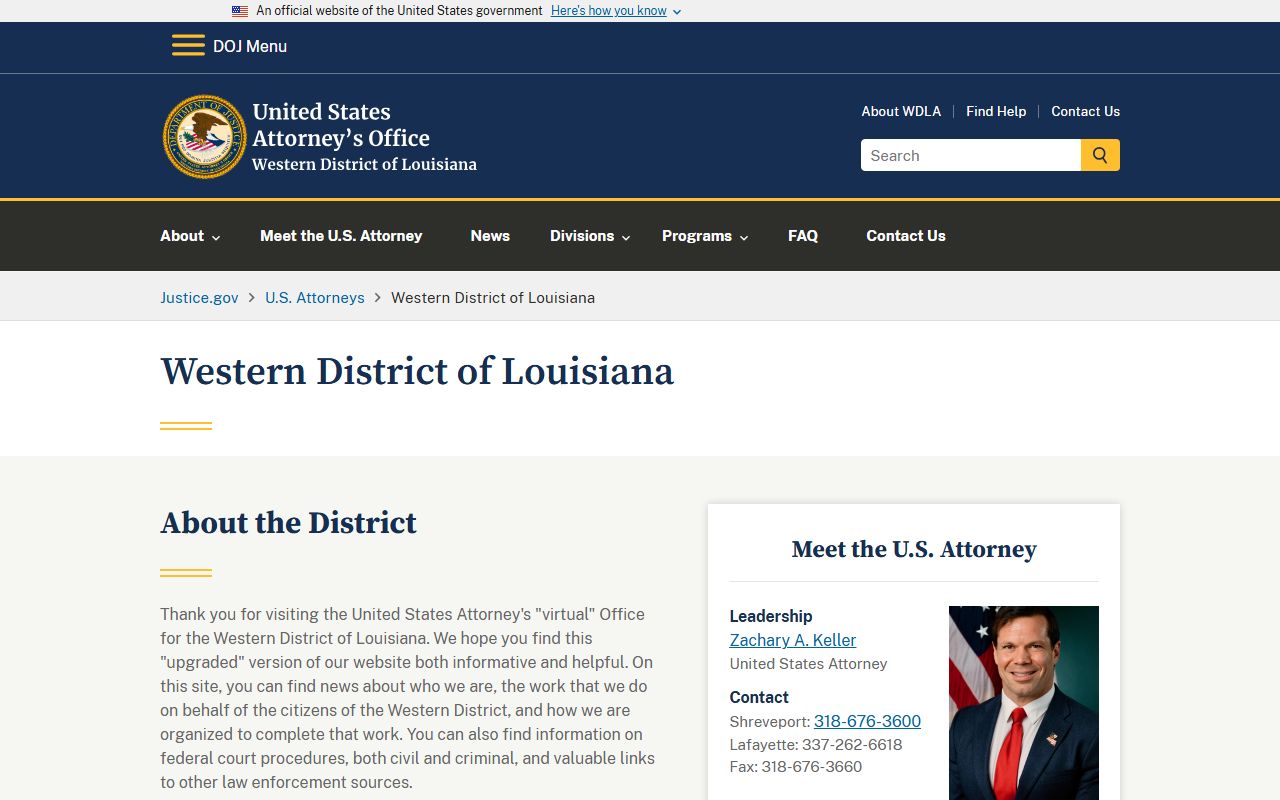
Federal prosecution is separate from local District Court charges, but the source illustrates that charge records depend on the court system handling the case.
Lincoln Parish Charge Status
Charge status can change after arrest. A first entry may not match the final charge list. Prosecutors can amend, reduce, add, or dismiss charges. A court can also enter a disposition after plea, trial, or other action. The Clerk's criminal file and minutes are the most useful public source for tracking those changes once the charge is filed with the court.
| Status | What It Means | How to Read It |
|---|---|---|
| Pending | The charge is filed or active, but final disposition has not been entered. | Check future court dates, minutes, and any bond or appearance conditions. |
| Amended | The filed charge changed from the original wording or statutory basis. | Compare the first charge entry with later prosecutor or court filings. |
| Reduced | The case moved to a lesser offense or lower severity. | Do not cite the original charge as the final conviction without the disposition. |
| Dismissed | The charge was ended by court or prosecutorial action. | Read whether the dismissal applies to one charge or the whole case. |
| Nolle prosequi | The prosecutor declined to continue prosecution of that charge. | It is not a guilty finding; confirm whether other charges remain. |
Charges vs Convictions
A person can have an arrest record and a filed charge without a conviction. Lincoln Parish court charges after arrest may end in dismissal, reduction, diversion, acquittal, plea, or sentence. The sheriff ticket FAQ notes that the District Attorney's Office offers a diversion program for qualifying offenses, with letters mailed to the address on the driver's license. That is another reason a charge entry must be followed through to the disposition.
| Point | Charge | Conviction |
|---|---|---|
| Legal meaning | An accusation that the court or prosecutor is addressing. | A guilty plea, verdict, or finding accepted by the court. |
| Where it appears | Citation, indictment, bill of information, arraignment, or charge list. | Disposition, judgment, sentence, or final minute entry. |
| Possible result | Can be pending, amended, reduced, dismissed, or nolle prosequi. | Can support sentence, probation, fine, cost, or custody terms. |
| Best verification | Clerk criminal file plus DA filing history. | Clerk disposition and sentencing record. |
Booking and Custody Records
Booking records answer a different question: where the person is, whether the person is in parish custody, and how jail contact rules work. Lincoln Parish Detention Center information comes from the Sheriff's Office and LPDC. The inmate roster page exists, but the embedded roster feed did not expose complete fields in the static research capture. Current custody questions can also be checked by phone through LPDC.
The official inmate phone system page is a jail-side source tied to custody rather than court charge filing.
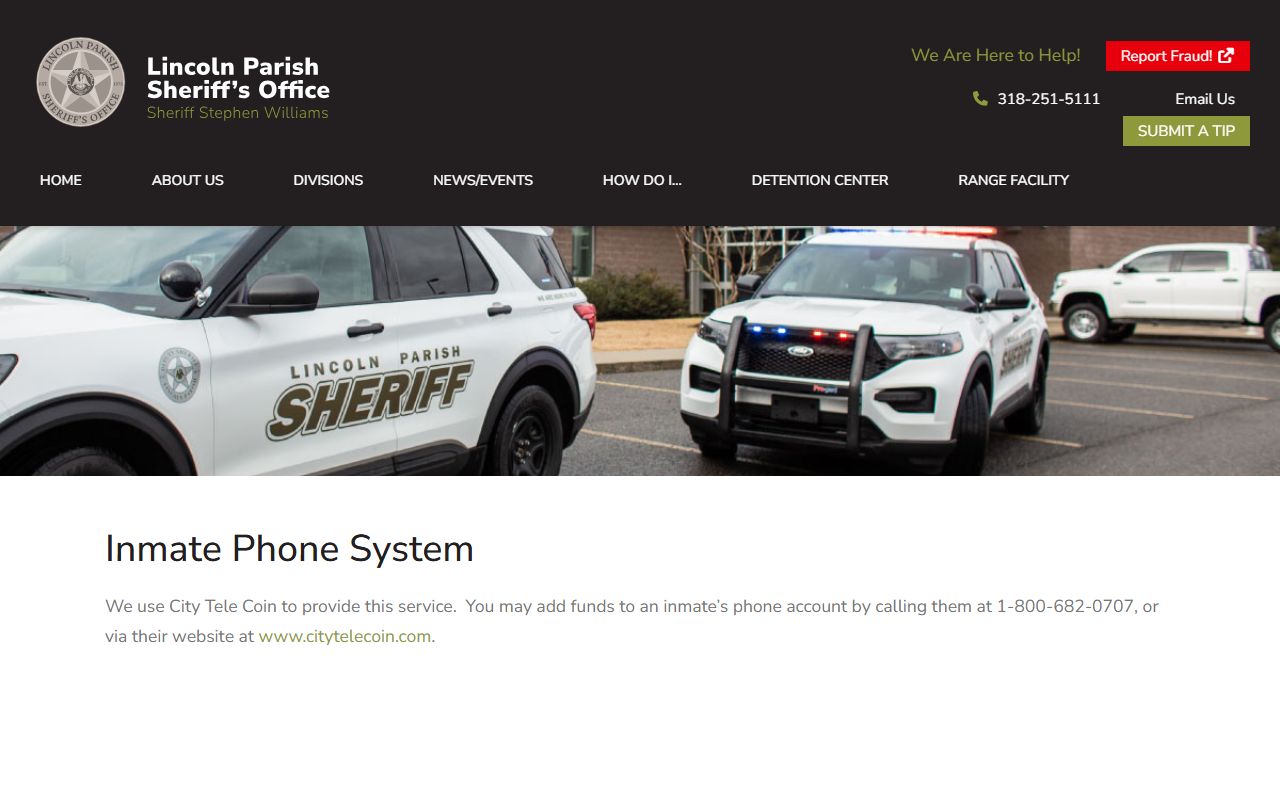
That custody source is useful after an arrest, but it does not replace a Clerk record for formal charges and disposition.
State and Federal Custody Lookups
Some people arrested in Lincoln Parish later move out of parish custody. The research points to Louisiana DOC and VINE/VINELink for sentenced or transferred custody, and to federal custody tools for federal cases. These systems are not substitutes for the Lincoln Parish court charge record. They help locate a person or custody notice after the local case or hold changes status.
The federal inmate locator is an official source for federal custody, not parish booking status.
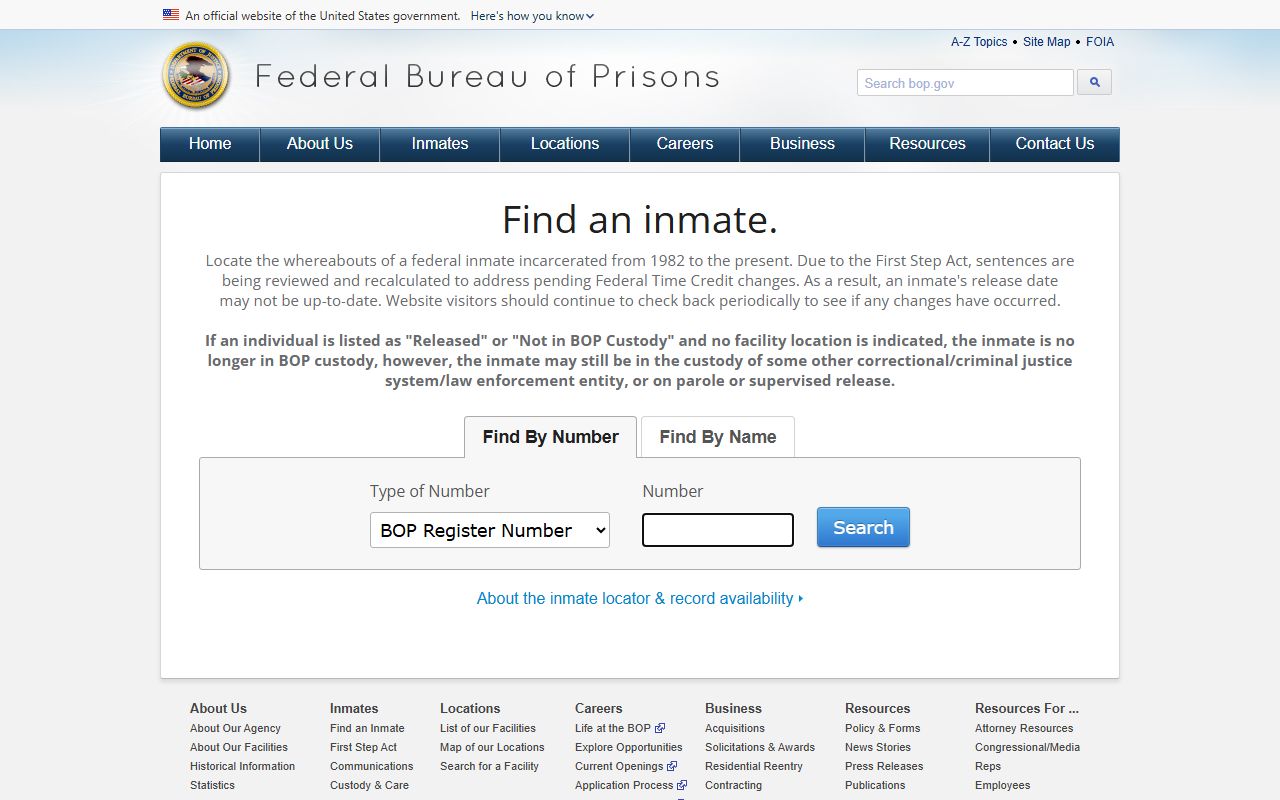
A federal custody match should be verified against the federal court record and should not be merged into a parish charge history without support.
Louisiana VINELink is an official custody notification channel for statewide custody information.

VINELink can help with custody notifications, while charge filing and case outcome still come from the court record.
Sealed and Expunged Charges
Louisiana law limits public access to some charge records. Juvenile matters are governed by Children's Code confidentiality provisions. Sealed or expunged criminal records should not be treated as public just because an arrest or charge once existed. The Lincoln Parish Clerk's expungement page says the Clerk does not provide legal advice or technical help with forms, and all filing fees are paid up front and are non-refundable.
| Record State | Public Access | Practical Effect |
|---|---|---|
| Open charge | May be available through Clerk criminal records if not otherwise restricted. | Read the current status before treating it as final. |
| Sealed charge | Limited by law or court order. | Access may require party status, court order, or legal authority. |
| Expunged charge | Public access is restricted after a qualifying Louisiana process. | Some agencies may still retain access when law allows. |
| Juvenile charge | Generally confidential under juvenile-record rules. | Do not describe juvenile charge records as open public lookup records. |
Restricted Lincoln Parish Charge Records
Louisiana Public Records Law gives broad inspection rights, but La. R.S. 44:3 governs access to law-enforcement, prosecutive, and investigative records. That matters for arrest and charge searches because sheriff reports, DA files, and Clerk court files are not one record set. A public case entry can exist while an investigative file remains restricted. A booking record can exist while final court status is still pending.
Use official sources in sequence. For filed charges, start with the Clerk's criminal records and Clerk Connect. For arrest reports, use the sheriff's public-records request channel. For current custody, use LPDC or the roster. For final outcome, read the court disposition. For employment, housing, credit, insurance, or other regulated use, use a legally compliant screening process rather than an informal arrest-record search.
Important: A Lincoln Parish arrest or charge entry is not proof of conviction unless the court disposition shows guilt.